Have you ever tried to make an important decision at Living Water, but couldn’t find the right information to help? Do you sometimes wonder how to access program outcome data, financial performance metrics, or donor giving insights? Us, too. Last week, we launched a project to help.
For years, Living Water has been on a journey to transform the way we use information for the mission. In the midst of the pandemic in November 2020, Living Water decided to accelerate digital transformation through the “Planning Ahead” interim strategy. The strategy said:
“Across all scenarios, we need to accelerate digital transformation within the organization. In scenarios 1 and 2, this is especially critical for external stakeholder engagement, but our ability to analyze data, track real-time metrics, and quickly adjust fundraising strategies will position us well regardless of how long the pandemic lasts or how the world responds.”
More recently in our Overflow 25 strategy, we state:
“We have committed to building a culture and systems that allow us to continuously listen and learn so that we deeply understand our neighbors’ wants, needs, and motivations.”
As part of this ongoing digital transformation, S&I and departmental leaders are launching a new project to assess how we use data today and design ways to improve data-informed decision making for the future. The “Data Intelligence Assessment and Planning” chartered project objective is…
“To engage outside experts in the area of data intelligence to work alongside internal staff to 1) assess where we are as an organization 2) map out a plan for launching a data intelligence practice at LW inclusive of elements of people, process, and technology.”
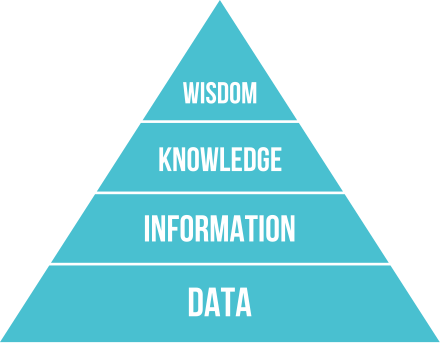
“Data intelligence” is a broad term and may sound scary at first, but it’s not. We are using this term because it’s broad enough to encompass things like data architecture, performance metrics, reporting, and analysis. This project covers all of these areas and helps us consider how well we transform data into knowledge and wisdom. This is not primarily a technology project, but instead addresses how people (us) develop ideas (mindsets), work together (process) and use tools (technology) to make better decisions. The DIKW pyramid by Russell Akoff is helpful to understand this transformative process (see Figure 1).
We just started our project and plan for the assessment and planning phases to conclude in early 2024. We look forward to engaging with many of you across Living Water to learn from your experience! If you have questions, contact S&I. We would be happy to help!